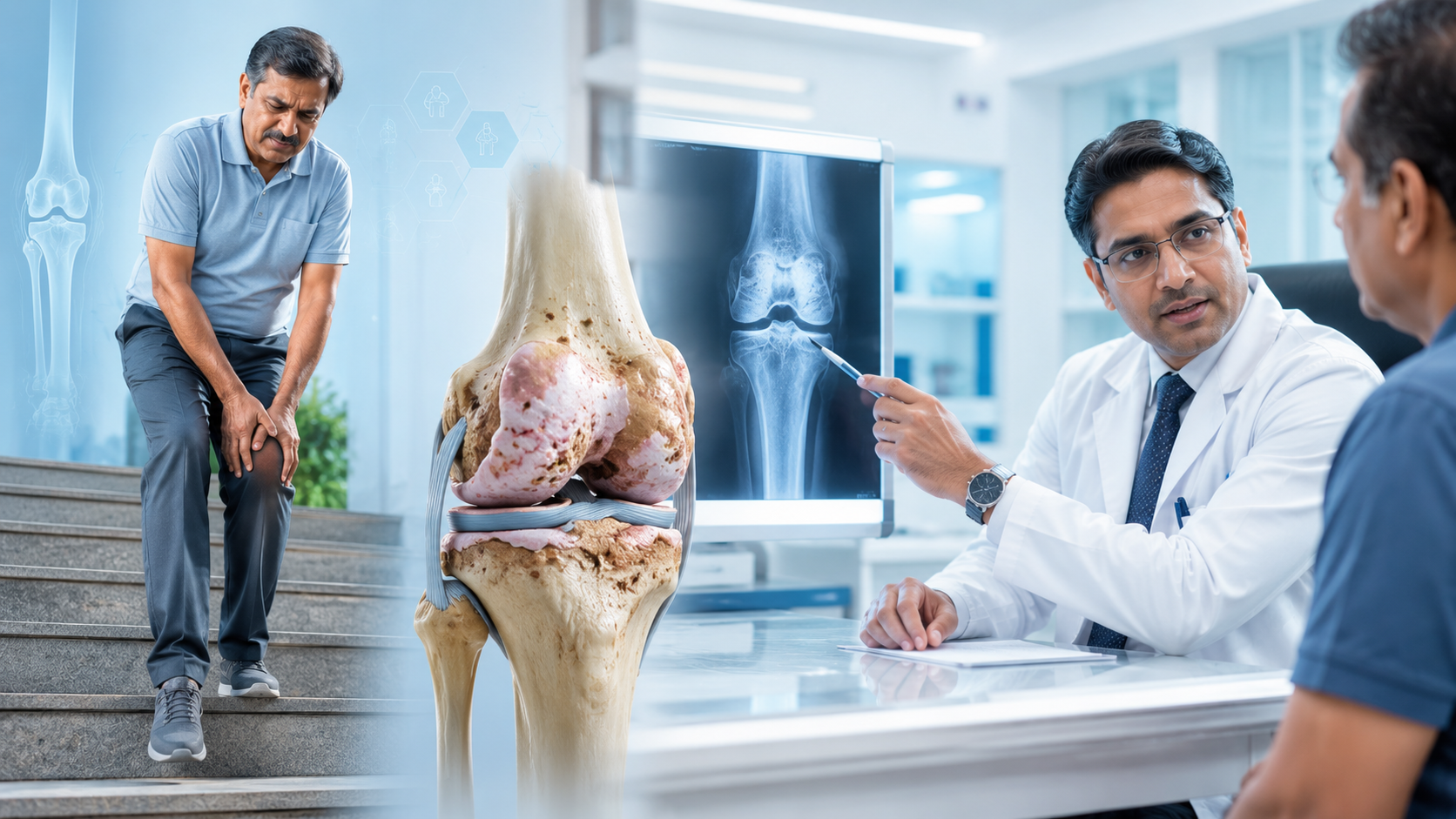
Knee pain can gradually turn simple daily activities into major challenges. Walking, climbing stairs, exercising, or even standing for long periods may become difficult and painful. While many knee conditions can be managed with medications, physiotherapy, and lifestyle modifications, there comes a point when these treatments stop providing relief. This is when many patients ask, "When Do You Need Knee Replacement Surgery?"
The answer depends on several factors, including the severity of pain, joint damage, stiffness, and how much your condition affects your quality of life. If knee pain is preventing you from enjoying your daily routine, it may be time to consider Knee Replacement Surgery.
Quick Overview: Signs You May Need Knee Replacement Surgery
| Symptom | Need for Surgery |
|---|---|
| Severe Knee Pain | ✅ Yes |
| Difficulty Walking | ✅ Yes |
| Knee Stiffness | ✅ Yes |
| Pain During Rest | ✅ Yes |
| Knee Deformity | ✅ Yes |
| Persistent Swelling | ⚠️ Possible |
| Failed Non-Surgical Treatment | ✅ Yes |
What Is Knee Replacement Surgery?
Knee Replacement Surgery is a procedure in which damaged cartilage and bone in the knee joint are replaced with artificial implants. The surgery is designed to reduce pain, improve movement, and help patients return to an active lifestyle.
It is commonly recommended for patients suffering from:
Osteoarthritis
Rheumatoid Arthritis
Post-Traumatic Arthritis
Severe Cartilage Damage
Chronic Knee Pain
1. Persistent Knee Pain That Affects Daily Life
One of the most common reasons people undergo Knee Replacement Surgery is persistent pain that interferes with everyday activities.
You may struggle with:
Walking
Climbing stairs
Sitting for long periods
Standing from a chair
Exercising
When pain continues despite medications and physiotherapy, surgery may become the most effective option.
Related Treatment
Patients experiencing advanced arthritis can benefit from specialized Joint Replacement Treatment in Patna.
2. Difficulty Walking or Climbing Stairs
The knee joint supports your body weight and allows smooth movement. As arthritis progresses, even short walks can become painful.
Common symptoms include:
Limping
Reduced walking distance
Difficulty climbing stairs
Dependence on support while walking
If mobility is significantly restricted, your orthopedic surgeon may recommend Knee Replacement Surgery.

3. Severe Knee Stiffness
Stiffness often develops when cartilage wears away and inflammation increases.
Signs of severe stiffness include:
Difficulty bending the knee
Trouble straightening the leg
Reduced flexibility
Limited range of motion
Patients with advanced stiffness often find daily tasks increasingly difficult.
4. Pain Even While Resting
Many patients are surprised to learn that pain during rest can be a sign of severe joint damage.
If you experience:
Night pain
Pain while sitting
Discomfort while sleeping
Constant aching
your knee condition may have progressed significantly.
5. Persistent Swelling in the Knee
Recurring swelling can indicate ongoing inflammation inside the joint.
You should seek medical evaluation if:
Swelling occurs regularly
Medication provides only temporary relief
The knee feels warm or tender
Mobility continues to decline
6. Visible Knee Deformity
Advanced arthritis may change the alignment of the knee.
Common deformities include:
Bow-legged appearance
Knock knees
Uneven walking posture
Such structural changes often indicate severe joint degeneration.
7. Non-Surgical Treatments Are No Longer Effective
Before recommending Knee Replacement Surgery, orthopedic specialists usually try conservative treatments such as:
Physiotherapy
Weight management
Pain medications
Knee braces
Steroid injections
Activity modifications
If these treatments fail to improve symptoms, surgery may offer the best long-term solution.
Related Treatment
Patients looking for non-surgical pain relief may explore Pain Management Treatment in Patna.
Conditions That Commonly Require Knee Replacement Surgery
Osteoarthritis
Osteoarthritis is the most common cause of Knee Replacement Surgery. It occurs when the protective cartilage in the knee gradually wears away.
Symptoms:
Joint pain
Stiffness
Swelling
Reduced mobility
Rheumatoid Arthritis
Rheumatoid arthritis is an autoimmune disease that causes chronic inflammation and joint damage.
Post-Traumatic Arthritis
Previous injuries such as fractures, ligament tears, or sports injuries can eventually lead to severe arthritis.
Related Treatment
Athletes and active individuals may benefit from Sports Medicine Treatment in Patna for injury management and recovery.
Benefits of Knee Replacement Surgery
| Benefit | Result |
|---|---|
| Pain Relief | Significant |
| Improved Mobility | Excellent |
| Better Joint Function | High |
| Increased Independence | High |
| Enhanced Quality of Life | High |
Most patients experience substantial improvements in comfort, mobility, and daily functioning.
Recovery After Knee Replacement Surgery
| Recovery Stage | Timeline |
|---|---|
| Walking with Assistance | 1–3 Days |
| Hospital Discharge | 2–5 Days |
| Daily Activities | 4–6 Weeks |
| Driving | 6–8 Weeks |
| Full Recovery | 3–6 Months |
Following a structured rehabilitation program is essential for successful recovery.
Why Choose Dr. Abhijeet Jayaswal for Knee Replacement Surgery?
Dr. Abhijeet Jayaswal specializes in:
Joint Replacement Surgery
Trauma Surgery
Spine Surgery
Sports Medicine
Pain Management
With extensive experience in orthopedic care, he provides personalized treatment plans tailored to each patient's needs.
Learn More
When Should You Consult an Orthopedic Specialist?
You should consult an orthopedic surgeon if:
Pain lasts for several months.
Walking becomes difficult.
Daily activities are affected.
Knee stiffness continues to worsen.
X-rays reveal severe arthritis.
Book a Consultation
If you're asking "When Do You Need Knee Replacement Surgery?", the answer often depends on how much knee pain and stiffness are affecting your daily life. Persistent pain, difficulty walking, joint deformity, and unsuccessful conservative treatments are strong indicators that surgery may be the right choice.
Consulting an experienced orthopedic specialist can help you determine the best treatment option and regain an active, pain-free lifestyle.
Frequently Asked Questions
What are the signs that I need Knee Replacement Surgery?
Persistent pain, stiffness, swelling, and difficulty walking are the most common signs.
Is Knee Replacement Surgery safe?
Yes. Modern Knee Replacement Surgery is considered safe and highly effective when performed by an experienced orthopedic surgeon.
How long does recovery take after Knee Replacement Surgery?
Most patients return to daily activities within 4–6 weeks, while full recovery may take several months.
Can Knee Replacement Surgery improve mobility?
Yes. Most patients experience significant improvements in mobility and quality of life after surgery.
Who should consider Knee Replacement Surgery?
Patients with severe arthritis, chronic pain, and limited mobility that do not respond to non-surgical treatments should consider surgical evaluation.
Ready to get started?
Schedule a consultation with our orthopedic specialists today for a personalized assessment.